

by MARCUS MUSHONGA
HARARE – GROWING debate across Africa over relations with China has resurfaced after criticism that African countries supplying minerals to the Asian economic giant do not enjoy the same visa privileges Beijing has extended to other regions.
Some African commentators argue that while China has become one of the continent’s largest trading partners and investors, the relationship must increasingly focus on fair economic exchange, industrial development and mutual respect.
Zimbabwean activist Rutendo Matinyarare sparked discussion on social media on Thursday after questioning why African countries that supply China with minerals are not granted visa-free access.
“We always punt China as an ally to Zimbabwe, but did you know that Zimbabweans can’t go to China visa free? Did you also know that some Chinese banks implemented western sanctions on Zimbabwe during the executive order sanctions? So how are we allies, only by us giving them our minerals,” Matinyarare queried.
His remarks touched on a broader concern shared by many analysts: Africa exports large quantities of raw minerals abroad while receiving relatively limited industrial development in return.
Across the continent, criticism has emerged in countries rich in natural resources such as the Democratic Republic of Congo (DRC), Zambia and Guinea, where activists and civil society groups have previously raised concerns about environmental damage, limited local beneficiation and the export of raw materials without significant value addition.
Some critics say such arrangements risk repeating historical patterns in which Africa exports raw resources but imports finished goods at far higher prices.
Echoing Matinyarare’s concerns, social media user Black Eagle Mathonsi wrote: “Indeed China is only ally to African minerals not Africans. In SA (South Africa) they are responsible for the collapse of textile and manufacturing industries. Now they are eating automotive industry one manufacturer at a time costing jobs.”
Others highlighted visa policies as symbolic of broader economic imbalances.
Rex Mhene noted: “There is not a single Africa country that goes to China visa free. Its only South America and EU countries. Even USA needs a visa to China. To be honest though, Chinese visa is the easiest to get, they rarely deny anyone a visa If you apply.”
Peter Kufa added: “We don’t get anything from China. They’re simply looting our minerals while a few individuals line their pockets. Also judging from current events, we can’t even bank on them coming to our rescue if ever we find ourselves in Iran’s position, they’re some friends indeed.”
The debate comes at a time when some African governments are increasingly pushing for policies that promote local processing of minerals rather than exporting raw materials.
Zimbabwe has been one of the most prominent examples.
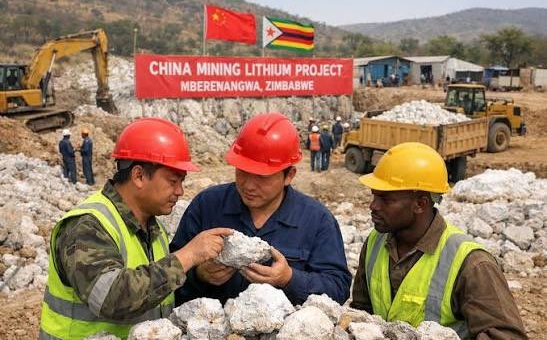
The government has taken steps to ban the export of certain unprocessed minerals, including lithium, insisting that investors establish processing plants and factories within the country.
The policy aims to ensure that Zimbabwe benefits from the full value chain of its mineral wealth rather than simply exporting raw ore.
Economists say such strategies can bring several benefits.
Processing minerals locally creates jobs in mining, engineering and manufacturing sectors. It also stimulates supporting industries such as energy, transport and logistics while generating higher export revenues from finished or semi-processed products.
Value addition can also strengthen technological development and industrial capacity within African economies.
Countries such as Botswana have demonstrated the advantages of beneficiation policies. By processing diamonds locally rather than exporting them entirely in raw form, Botswana has created skilled employment and built a globally recognised diamond industry.
Many policy experts argue that Africa’s vast mineral resources — including lithium, cobalt, platinum, copper and rare earth elements — give the continent a unique opportunity to industrialise.
Rather than exporting raw materials, they say African countries can use these resources to develop domestic manufacturing, strengthen regional supply chains and increase economic resilience.
As debate over Africa’s partnerships with global powers continues, the central issue for many observers remains how the continent can ensure its natural wealth translates into sustainable development, industrial growth and prosperity for its people.
– CAJ News