

by LUKE ZUNGA
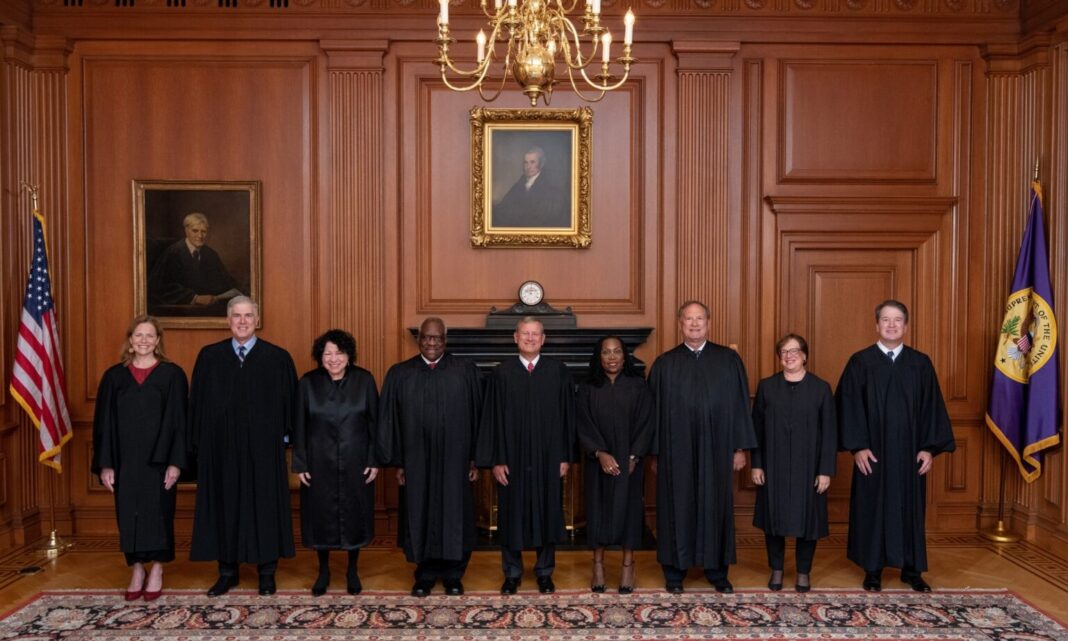
JOHANNESBUR – THE United States Supreme Court ruled 6-3 that the use of tariffs for political threats is unlawful.
On taking over the presidency in January 2025, Donald Trump’s administration applied wide-ranging tariffs on almost all countries in the world using the International Emergency Economic Powers Act (IEEPA) of1977.
On 20 February 2026, the US Supreme Court ruled that tariffs are illegal. That means tariffs imposed on different countries, premised on the IEEPA, are null and void.
The crux of the case, from the judgement https://supreme.justia.com/cases/federal/us/607/24-1287/, is that: “Shortly after taking office, President Trump sought to address two foreign threats. The first was the influx of illegal drugs from Canada, Mexico, and China…. The second was “large and persistent” trade deficits…….
The President determined that the first threat had “created a public health crisis,” …. the second had “led to the hollowing out” of the American manufacturing base and ‘undermined critical supply chains…..’.
Donald Trump invoked his authority under IEEPA to respond.
“Enacted in 1977, IEEPA gives the President economic tools to address significant foreign threats…. When acting under IEEPA, the President must identify an ‘unusual and extraordinary threat’ to American national security, foreign policy, or the economy, originating primarily ‘outside the United States’….. And he must ‘declare a national emergency’ under the National Emergencies Act.
He may then, ‘by means of instructions, licenses, or otherwise,’ take the following actions to ‘deal with’ the threat: ‘investigate, block during the pendency of an investigation, regulate, direct and compel, nullify, void, prevent or prohibit any acquisition, holding, withholding, use, transfer, withdrawal, transportation, importation or exportation of, or dealing in, or exercising any right, power, or privilege with respect to, or transactions involving, any property in which any foreign country or a national thereof has any interest’.”
President Trump declared a national emergency to both the drugs and the trade deficits, which he deemed “unusual and extraordinary” threats.
He then imposed tariffs to deal with each threat. As to the drug trafficking tariffs, the President imposed a 25% duty on most Canadian and Mexican imports and a 10% duty on most Chinese imports. Then he proceeded to use tariffs to settle political issues with other countries across the globe and changed the tariffs up and down to his wishes.
The Supreme Court decision was that this is illegal. The IEEPA did not mention the word “tariffs” and the President cannot use this law for political ends.
The petitioners were Learning Resources Inc, certain US states and businesses, that tariffs affected their businesses overnight, and took prices to vagaries never thought of in life, and that there should be guardrails around the president’s ability to impose them. They succeeded.
In reply, Trump imposed 10% tariffs on all countries affected by this decision, using Section 122 of the Trade Act of 1974.
Micheal Froman, President of Foreign Council Relations, writes, “IEEPA is only one of several statutes under which the president has imposed tariffs.
Going forward, the administration has a number of other authorities it can use to try to replace the IEEPA tariffs, but they are more constrained.
They either require greater process, such as investigations, or they are time limited. For example, under Section 122, a president can impose up to 15 percent tariffs for 150 days by citing a balance of payments crisis and using that time to launch and complete processes under other authorities, such as Sections 201, 232, 301, or 338….
The 10 percent tariff to be implemented under Section 122 can be imposed for just five months, the administration will soon face a decision whether to impose new tariffs under the other authorities…..”
The Supreme court will issue instructions to the Customs to stop collecting the tariffs and to the Treasury to refund tariffs collected. It will be chaos for some time, because American consumers who had paid higher prices might seek refunds as well.
Going forwards, and I think this is relevant for South Africa and other countries, it would be prudent to use American courts to challenge the imposition of tariffs by the USA since the alternatives to IEEPA have stringent limitations to be followed.
– CAJ News