
by MATEO LOPEZ
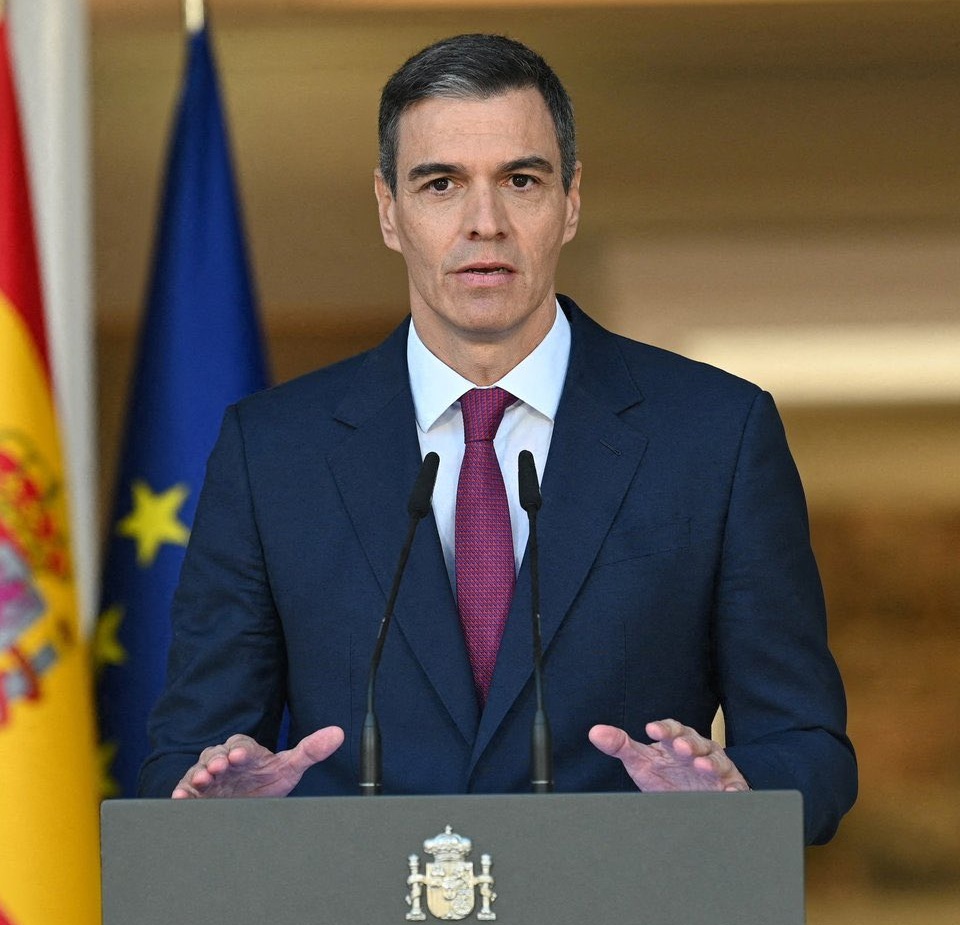
MADRID – SPANISH Prime Minister Pedro Sánchez is receiving global praise for firmly opposing the use of Spanish territory for military aggression following the outbreak of war in the Middle East between Iran and the United States–Israel alliance.
As tensions escalated into open conflict, Sánchez vehemently refused to allow Washington to use Spain as a launch pad for military operations against Tehran, a decision widely welcomed by anti-war voices across the world.
The Spanish leader has consistently emphasised the importance of diplomacy, international law and peaceful resolution of conflicts, warning that wars based on disputed claims or geopolitical rivalry often bring devastating consequences for civilians.
Sánchez also reflected on previous conflicts in the Middle East, pointing to the dangers of wars launched on claims that later proved untrue.
In the early 1990s and later during the 2003 invasion of Iraq, the United States and its allies justified military action by alleging that Baghdad possessed weapons of mass destruction.
Those claims were later widely disputed after inspectors failed to find such weapons, leaving Iraq devastated by years of war and instability.
Analysts say the experience of Iraq has shaped how many governments view new military confrontations in the region.
In the current crisis, some Western governments including Israel have claimed that Iran was close to developing a nuclear weapon.
However, United Nations nuclear experts have disputed the urgency of such claims, noting that international inspections have long monitored Iran’s nuclear activities.
Observers have also pointed out that Israeli Prime Minister Benjamin Netanyahu has repeatedly warned for more than two decades that Iran was on the verge of acquiring nuclear weapons.
Critics argue that such warnings have been made year after year without definitive confirmation.
At the same time, Israel is widely regarded as the only country in the Middle East believed to possess nuclear weapons, though it does not officially confirm this and does not allow the same level of international inspection applied elsewhere.
Against this backdrop, Sánchez has taken a firm stand against further escalation in the region.
The Spanish leader rejected pressure to support US military operations against Iran from Spanish soil, stressing that Spain would not become a platform for war.
Sánchez also criticised threats from United States President Donald Trump, who warned Spain of economic consequences if it refused to cooperate militarily.
Trump threatened to cut trade ties with Spain if the country continued to deny the United States access for military operations.
The Spanish prime minister’s refusal has resonated strongly with peace advocates who argue that Europe and the wider international community must prioritise diplomacy over military confrontation.
Several commentators on social media have gone further, calling for Sánchez to be recognised internationally for his stance.
Wisal Khan wrote: “Dear world (Sánchez) is the Man to be Nominated for the Nobel peace prize.”
Another user, Frank Underwood, expressed pride in Spain’s position, stating: “Now Spanish people around the globe can be proud again. Once again Spain is at the right side of history.”
Pomni added a pointed reflection on global leadership and accountability, writing: “Not a war criminal, didn’t start wars, didn’t destroy countries for his own benefit and lies, didn’t break the international laws, and yee they will not choose him (Sánchez) because he isn’t/didn’t do any of this (violating international laws).”
The reactions illustrate growing public frustration with the United States’ prolonged wars and the human cost of geopolitical conflict.
According to critics of the latest escalation, the US-Israel military confrontations in the Middle East have already caused devastating humanitarian consequences, with reports of large numbers of civilian casualties, including children.
For many observers, Sánchez’s stance represents a rare example of political leadership prioritising peace, diplomacy and international law at a time when tensions between global powers appear to be rising.
His refusal to allow Spain to become America’s staging ground for war has therefore been widely interpreted as a call for restraint and a reminder that international disputes must ultimately be resolved through dialogue rather than military force.
As the conflict continues to raise fears of wider regional escalation, voices calling for peace – including those supporting Spain’s position – are urging the US-Israel to return to negotiations with Iran to prevent another devastating war in the Middle East.
– CAJ News