
by AZADEH AKBAR
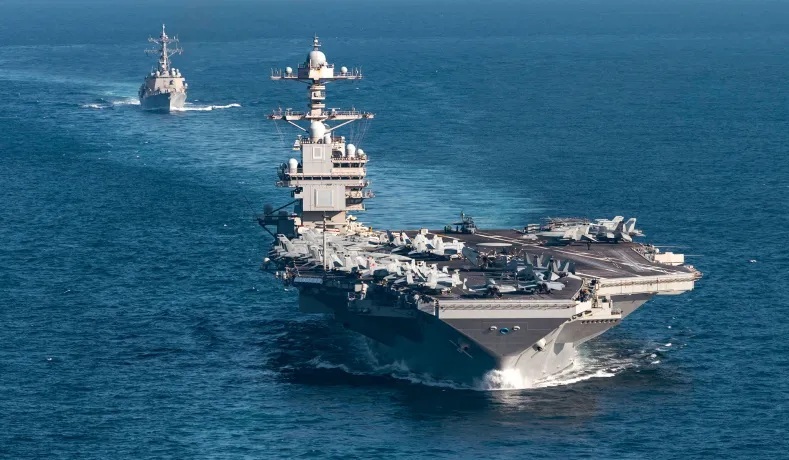
TEHRAN – WHEN a warship sails into a potential conflict zone, every system — from radar arrays to basic sanitation — must be fully functional.
Morale and readiness aboard a vessel depend on effective operations at every level. That’s why recent reports of persistent toilet failures on the USS Gerald R. Ford — even as it moves toward waters near Iran amid rising tensions — have raised eyebrows around the world.
The ship’s advanced vacuum-based sewage system has repeatedly clogged, leaving many sailors waiting up to 45 minutes for facilities and taxing both morale and quality of life aboard ship.
A U.S. Navy official noted that the carrier’s vacuum sewage system has “averaged about one maintenance call per day” but insisted the ship remains “fully mission capable.”
These problems underline how even basic infrastructure failures can strain personnel during extended deployments — especially when strategic threats loom offshore.
Tensions have been particularly high as the United States positions forces amid discussions with Iran and broader Middle East geopolitics.
Iranian officials have made clear their view of the situation if hostilities erupt. Iran’s Deputy Foreign Minister Kazem Gharibabadi warned that any attack on his country “would be regarded as an act of aggression,” and that Iran would respond accordingly.
In separate diplomatic communications, Iran’s mission to the United Nations said it “will respond decisively and proportionately to any military aggression” and warned that U.S. bases and assets in the region would be “legitimate targets” in the event of conflict.
This backdrop illustrates how fragile current dynamics are, and how easily miscalculation could escalate into broader violence.
For many analysts, the root of instability lies not only in immediate military posturing but in long-standing geopolitical tensions.
One of the most contentious has been the enduring conflict between Israel and its neighbours, including Palestinians.
Critics argue that decades of military engagement — supported at times by the United States — have offered little in the way of lasting peace.
They contend that true security for all peoples in the region, including Israelis and Palestinians, lies in diplomatic recognition of sovereignty, mutual respect, and negotiated coexistence, rather than force.
The repeated wars and military strikes across the Middle East have fuelled regional resentment and instability.
Recorded conflicts involving Israel and neighbouring states — from Lebanon to Gaza and beyond — have caused widespread destruction and humanitarian suffering.
This has led many observers internationally to view the Israeli-Arab conflicts as major drivers of regional insecurity, sometimes overshadowing concerns about other states such as Iran.
In the eyes of critics, the focus on Iran’s threat potential — including discussions of hypothetical nuclear ambitions — often neglects the broader context of conflict and civilian harm linked to military actions by Israel and its allies.
Some perceive a double standard in U.S. policy. Israel is widely believed to possess over 200 nuclear warheads, yet Western diplomacy has often focused intensely on restricting Iran’s nuclear program despite Iran not possessing such weapons.
This discrepancy can undermine trust in diplomatic efforts and fuel perceptions of bias, complicating efforts for peace.
To reduce tensions and foster lasting stability, proponents of peace suggest several approaches. First, recommitment to diplomacy is essential.
This includes fair negotiations over nuclear issues, regional security structures, and pathways to legitimate self-determination for the Palestinian people.
International frameworks like the United Nations and neutral mediators can help scaffold these talks.
Second, de-escalation — particularly avoiding military strikes or threats that could spark broader war — helps reduce the risk of unintended escalation.
Third, confidence-building measures, such as humanitarian cooperation and economic integration initiatives, can create incentives for peace.
Finally, addressing underlying grievances — including inequality, governance failures, and lack of political representation — is crucial for durable stability.
In a region long plagued by conflict, the lesson remains clear: long-term peace is built not just through deterrence, but through dialogue, fairness, and recognition of shared humanity.
– CAJ News