
by MATEO LOPEZ
MADRID – THE international response to the recent United States‑Israel airstrikes on Iranian oil depots and fuel infrastructure has been marked by growing condemnation from world leaders, legal scholars, and nations around the globe.
Many describe the attacks — which hit civilian energy facilities rather than military bases — as illegal, dangerous, and strategically reckless, raising fears of a broader economic and humanitarian crisis.
Iran’s Ministry of Foreign Affairs spokesman Esmaeil Baqaei called the strikes a “dangerous new phase” in the conflict and “war crimes, crimes against humanity, and genocide‑all at once.”
He wrote that the bombing of fuel depots — not military targets — “releases hazardous materials and toxic substances into the air, poisoning civilians, devastating the environment, and endangering lives on a massive scale.”
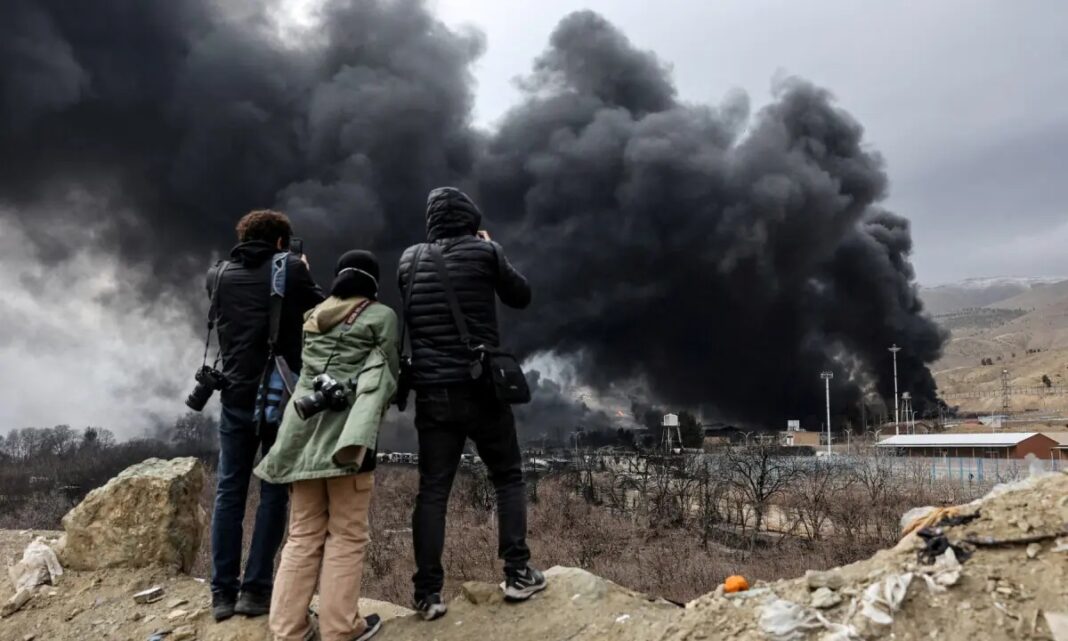
This environmental risk was soon underscored as Iranian authorities warned residents about toxic acid rain and hazardous air quality after fires at Tehran’s fuel depots.
Attacking public infrastructure rather than strictly military facilities is dangerous on multiple fronts: it endangers civilian lives directly, disrupts essential services like fuel distribution, and can create long‑term environmental hazards.
Such attacks undermine international humanitarian law principles that require combatants to distinguish clearly between military targets and civilian infrastructure — especially vital lifelines like energy, water, and food supplies.
The global economic impact of targeting Iran’s energy infrastructure would be profound.
Iran is a major oil producer, and disruptions to its fuel supply — especially if expanded beyond domestic distribution centers — could contribute to higher global oil prices, spurring inflation worldwide.
Already, markets are sensitive to instability in the Middle East, including potential closures of key transit routes like the Strait of Hormuz, through which a significant portion of global oil trade passes.
Growing world antipathy to the conflict is evident.
Spanish Prime Minister Pedro Sánchez has spoken out strongly against the US‑Israel war on Iran, labeling it a “disaster” and stressing that military escalation only deepens global instability while violating international law.
Sánchez has emphasized that “governments are here to improve people’s lives, to provide solutions to problems, not to make people’s lives worse” and has refused US requests to use Spanish bases for attacks on Iran.
Other nations, including Switzerland, have also criticized the strikes as unlawful. Swiss Defence Minister Martin Pfister said they constitute a breach of international law and urged all parties to cease hostilities to protect civilians.
Meanwhile, in the Middle East, sympathy for Iran’s position is rising. Reports indicate that some groups in Iraq and elsewhere are arming themselves with the intent to target US military bases, while voices in Bahrain and the wider region emphasize that the current war threatens broader regional security and economic well‑being.
The world increasingly views the conflict not merely as a bilateral dispute but as a potential catalyst for wider conflict and economic disruption.
Nations dependent on Iranian fuel supplies are particularly wary: prolonged instability could lead to higher energy costs, disrupted supply chains, and inflationary pressures across Asia, Africa, and Europe.
In this context, calls for diplomacy and restraint are intensifying.
Many global commentators argue that attacking civilian infrastructure only deepens resentment, extends conflict, and endangers innocent lives — and that true security can only be achieved through negotiation and respect for international law.
– CAJ News